
Five Makers Left: Passementerie on the Heritage Crafts Red List While Tassels Return for 2026
Passementerie, the trade that makes tassels, fringe, gimp, bullion and rosettes for furnishing and dress, is recorded as Endangered on the Heritage Crafts Red List, which counts between 1–5 British professionals earning a main income from the work, between 1–5 earning a side income and zero apprentices. Interior press reports the opposite signal from the buying side: designers name tassels as the detail replacing skirted furniture for 2026, and fringe carries a top-trend placement from 2025 into the following year, strongest in lighting. Sarelli Textiles, one of the leading Italian manufacturers of luxury fabrics, hand-tufted rugs and bespoke custom carpets designed and made in Italy, supplies the interior designers, architects and hospitality projects that specify trimmings against a curtain or an upholstered seat.
Passementerie Is Recorded as Endangered on the Heritage Crafts Red List With Zero Apprentices
The Heritage Crafts Red List entry for passementerie places the craft in the Endangered band and records between 1–5 professionals whose main income comes from passementerie, between 1–5 earning a side income from it, zero apprentices and between 11–20 amateurs. Only two companies in the United Kingdom have two or more employees working in passementerie. Heritage Crafts publishes the bands on the Red List entry for passementerie.
| Red List category | Recorded band | What the band counts |
|---|---|---|
| Risk status | Endangered | Craft status assigned to passementerie |
| Professionals, main income | 1–5 | Main income from passementerie |
| Professionals, side income | 1–5 | Part of income from passementerie |
| Apprentices | 0 | Recorded apprentices in training |
| Amateurs | 11–20 | Non-professional practitioners |
| Companies with two or more employees | 2 | British businesses of that size |
| Skill at greatest risk | Cord spinning | Learnable only by watching a master |
Zero apprentices is the band that decides the next decade for passementerie. A craft with between one and five main-income professionals and no recorded apprentices has no confirmed route by which cord spinning passes to a new worker, and Heritage Crafts names cord spinning the skill at greatest risk because cord spinning can only be learned by watching a master. Most passementerie practitioners are recorded as near retirement age.
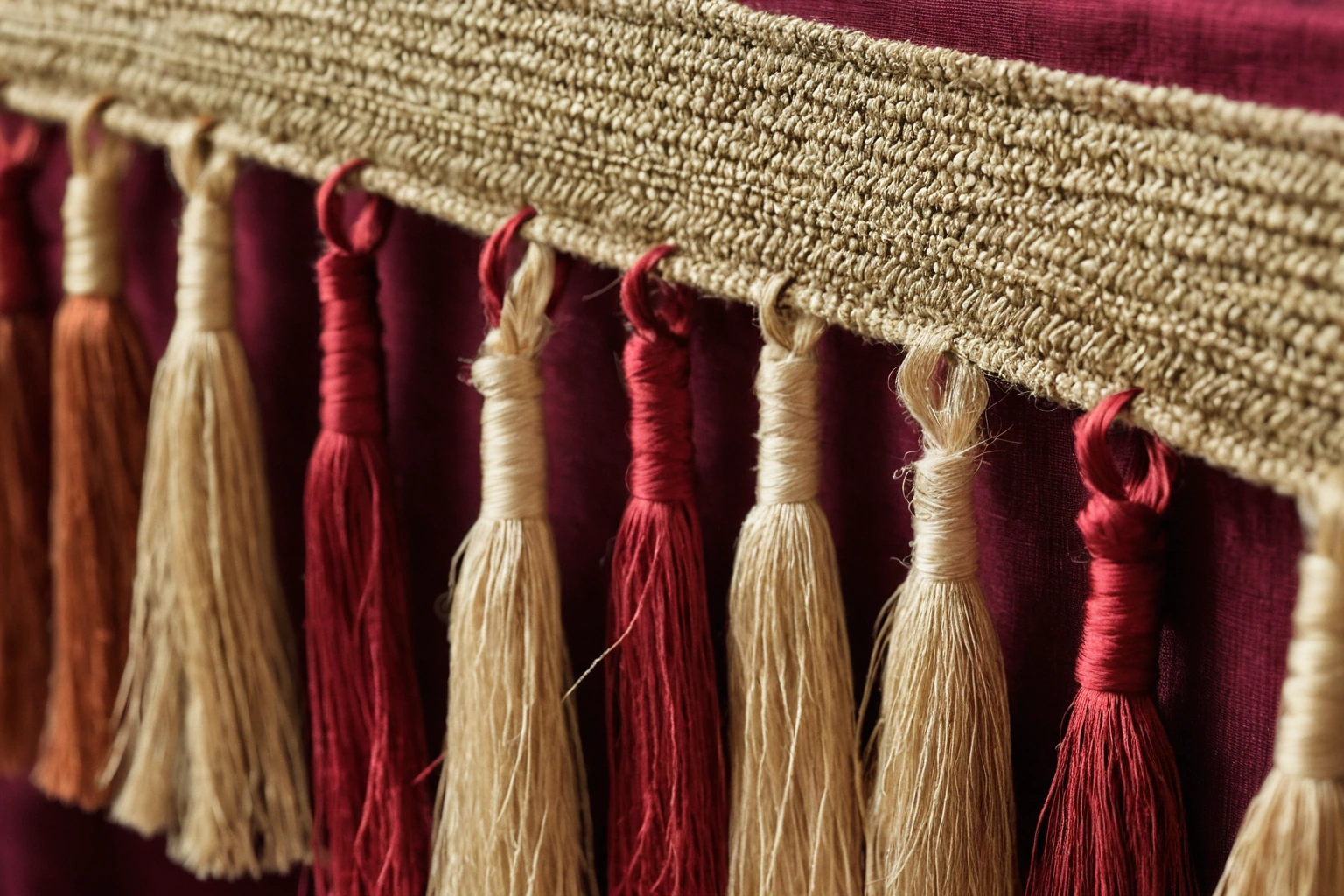
What Passementerie Means: Gimp, Bullion, Rosette, Fringe and Cord Spinning
Passementerie covers the trimmings sewn onto cloth rather than woven into it, and the trade names each component by how the component is built. I learned the vocabulary and the bench sequence during a short training with a trimmings maker, where the first lesson was that every component below is a twisting or wrapping operation run in one direction, and that the direction is what the eye reads as quality.
- Gimp
- A narrow flat or round braid of twisted threads, sewn along an edge or laid in a pattern over upholstery.
- Bullion
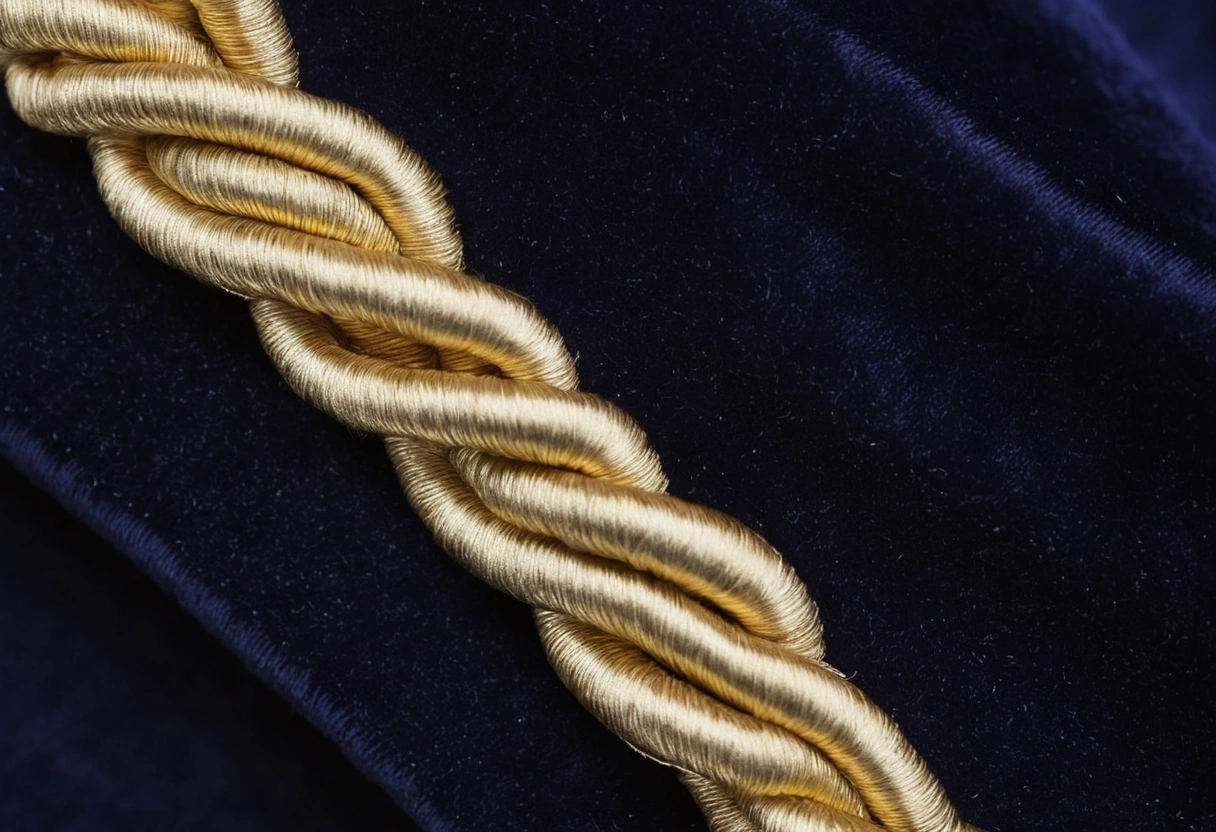
- A firm coiled cord made by wrapping thread tightly around a core, used for borders, tie-backs and rosette outlines.
- Rosette
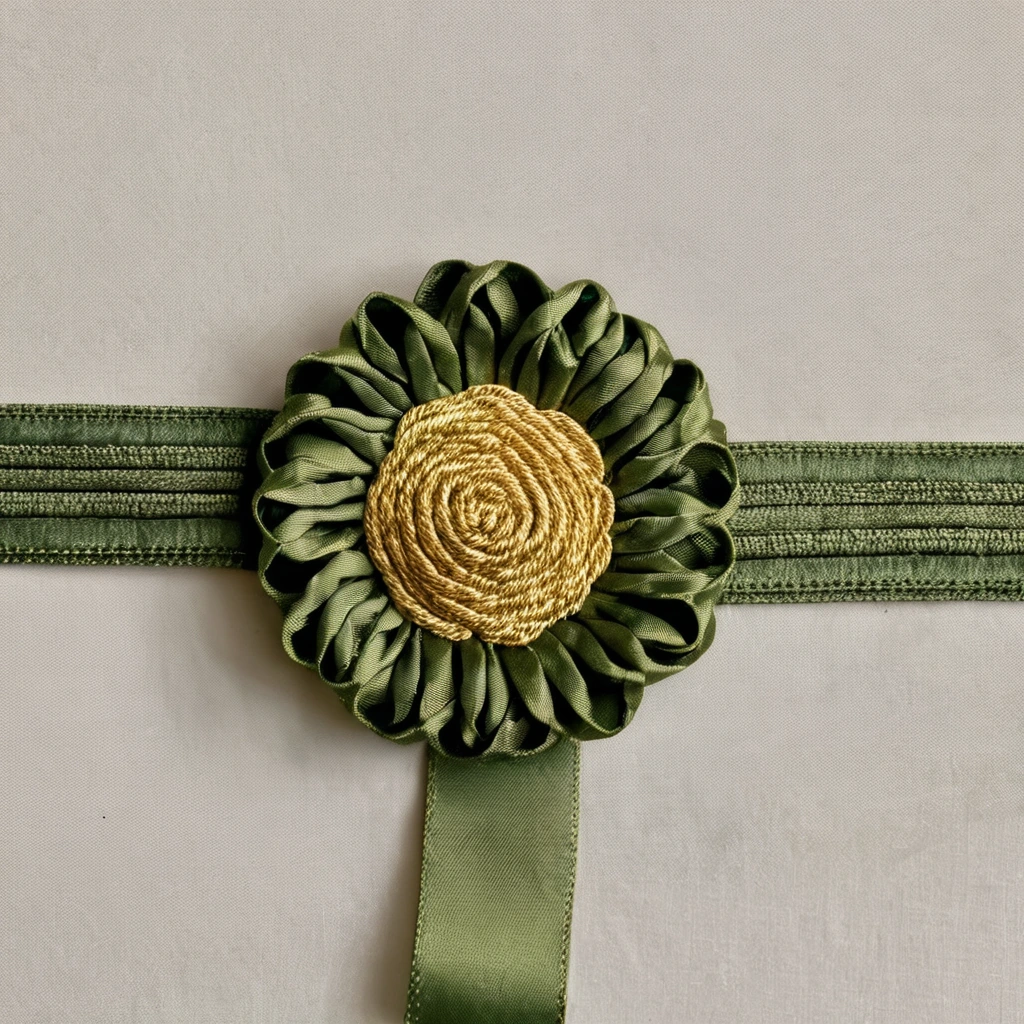
- A round trim built by coiling cord or ribbon into a flat disc, usually finished with a wrapped boss at the centre.
- Fringe
- A woven header tape with a hanging warp below it, sewn to a valance, a cushion edge or a lampshade.
- Cord spinning
- Twisting plied threads into cord on a spinning frame; named by Heritage Crafts as the skill at greatest risk of loss.
The Fifth Red List of May 2025 Counts 285 Crafts Against 259 in 2023
The fifth edition of the Heritage Crafts Red List was presented in May 2025 during London Craft Week and covers 285 crafts, against 259 in the 2023 edition. The May 2025 edition is the first published after the United Kingdom ratified the UNESCO Convention for the Safeguarding of the Intangible Cultural Heritage, and the edition introduced a new Resurgent Crafts category alongside the existing risk ratings. The Institute of Historic Building Conservation reports the edition, the two craft counts and the new category in its note on the fifth Red List of May 2025.
A rise from 259 crafts to 285 crafts is not a count of 26 additional trades in decline, because the 2025 edition added a Resurgent Crafts category and the 285-craft total therefore includes recovering crafts alongside Endangered ones. What carries across editions is the per-craft band, which is the figure Heritage Crafts publishes for passementerie.
Why a Craft With Between One and Five Makers Meets a 2026 Tassel Trend
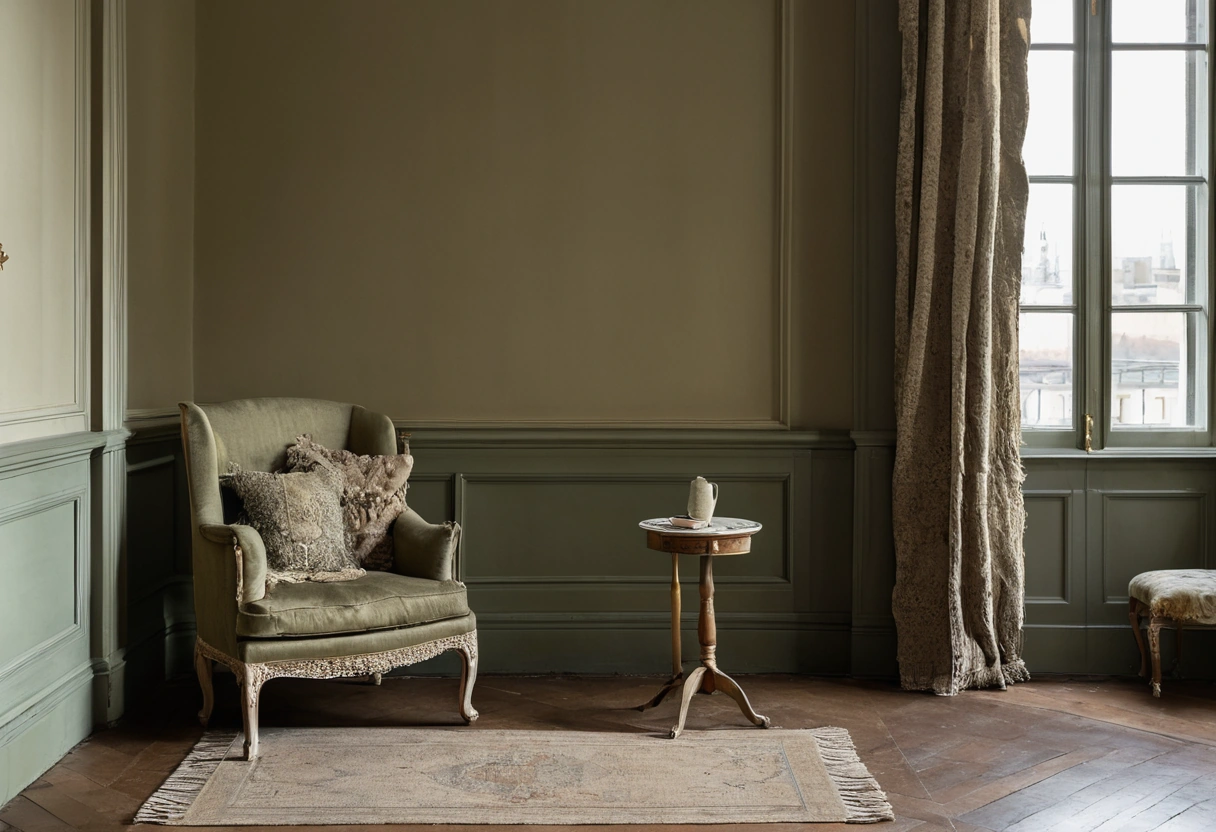
Interior press reports rising demand for tassels and fringe in the same period the Red List records between one and five British professionals earning a main income from passementerie, and the two records measure different things: the press measures what buyers want, the Red List measures who can make it. Homes & Gardens reports that designers name tassels as the detail replacing skirted furniture for 2026 and that fringe was the preferred “grandma detail” at WOW!house, in its tassel trend feature. Luxury London reports fringe as a top trend for 2025 continuing into the following year and strongest in lighting, in its fringe interior trend piece.
| Claim | Named source | Condition on the claim |
|---|---|---|
| Tassels replace skirted furniture for 2026; fringe named the preferred “grandma detail” | Homes & Gardens | Designers quoted in consumer press plus one show house scheme; no sales data published |
| Fringe a top 2025 trend, strongest in lighting | Luxury London | Trend reporting; no volume or revenue figure published |
The mismatch between the trend coverage and the Red List bands is a supply question rather than a taste question. A fringed lampshade, a tasselled cushion and a bullion border on a curtain head all require trimmings somebody has to make, and between one and five British professionals make a main income from the work. The Red List records the British headcount only and publishes no import volume, so the overseas and machine-made share of trimmings reaching a British scheme is not published.
Five Signs That Separate Hand-Made Trimmings From Machine-Made Trimmings
Five observable features separate hand-made passementerie from machine-made trim, and all five can be checked on a sample card without equipment: the twist of the cord, the build of the fringe header, the shape of the tassel head, the regularity of the repeat and the finish at the cut end. The Heritage Crafts entry publishes headcount bands rather than a definition of hand-made work, so the five signs below are bench observation from a short training with a trimmings maker, not a certified specification.
- Cord twist varies along the length. Hand-spun cord carries a twist that changes slightly from one span to the next, because the spinning motion is not repeated exactly. Machine-set cord looks uniform under a loupe and often shows a glazed fibre surface where heat fixed the twist.
- The fringe header is woven, not glued. Hand-made fringe is built on a woven header tape whose hanging threads belong to the tape structure. A header with bonded threads shows a shiny line along the top edge when the fringe is bent back against the light.
- The tassel head is wound over the neck. A hand-tied tassel has a head wound over the neck of the bundle with the winding thread ended inside. A moulded head is one piece, shows a parting line and does not compress when pinched.
- The repeat is not identical unit to unit. A hand-made run of rosettes or bullion differs slightly in coil spacing between units, since each unit is wrapped and pinned separately. Identical repeats are the fastest single check on a sample.
- The cut end is finished. Hand-made trimmings end in a whip stitch, a bound edge or a worked thread tail. A machine-cut length shows raw splayed fibres and often a heat-glazed tip.
What Hand-Made Trimmings Cost and How Long Hand-Made Trimmings Take
Hand-made passementerie costs more per metre than machine-made trim and takes longer to supply, because a maker wraps, coils, twists and stitches each metre instead of running the metre through a machine. No per-metre price and no production time for British hand-made trimmings appears in the figures used here, which are headcount bands, risk ratings and press trend reports, so no amount is quoted and a per-metre figure comes from a supplier’s own list.
Lead time on hand-made trimmings moves with how much cord spinning and rosette work an order contains, with the dye lot available for the specified colour and with whether the fringe header has to be woven for that order alone. A curtain scheme specified with a bullion border and hand-tied tassels should be scheduled with the trimmings treated as the longest item in the order, ahead of the fabric, because only two British companies employ two or more people in the trade. Paying that price and waiting that long is the practical form of support for a craft with zero recorded apprentices, and a tassel trend filled entirely by machine-made trim leaves the Red List bands where they are.
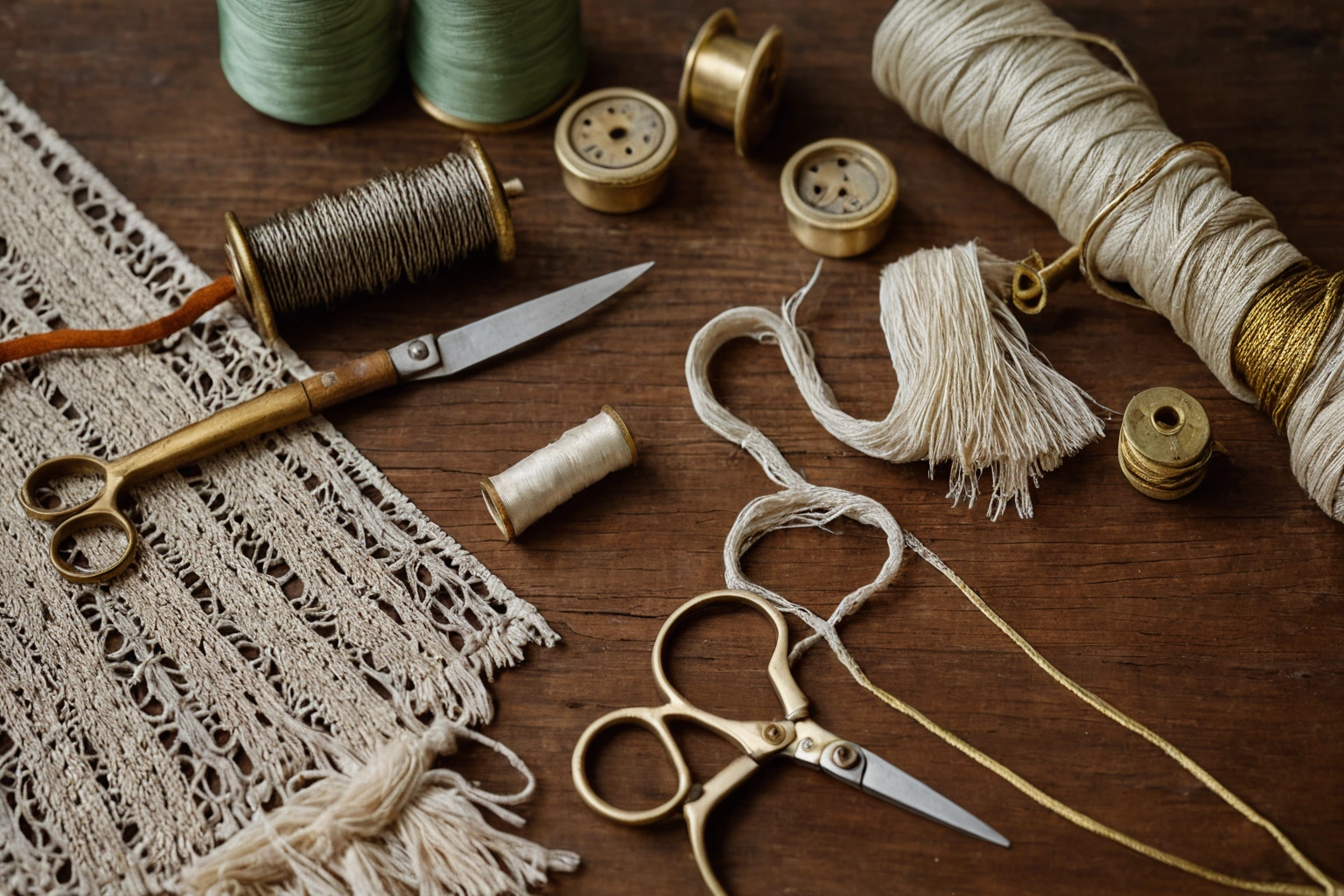
Passementerie at Court, in the Northern Mills and on the Hampton Court State Bed
Passementerie reached a first recorded peak in the seventeenth and eighteenth centuries, when court and aristocratic households bought trimmings for state beds, hangings and dress, and a second peak in the nineteenth century, when the craft moved into the industrial centres of northern England. The Heritage Crafts entry records that the fringe of the state bed at Hampton Court Palace was restored in the 1980s, which places hand-made passementerie inside conservation work as well as inside new furnishing schemes. The dates and the restoration are published on the Heritage Crafts page on passementerie and its history.
Two centuries of court demand and a century of northern mill production built up the trimmings still hanging in British historic interiors, and the conservation work that keeps those trimmings in place depends on the same cord-spinning skill the Red List records as the highest risk inside the craft. The 2026 trend for tassels and fringe arrives into that position: visible demand for trimmings, and between one and five British professionals recorded as earning a main income from the work.